Wednesday, November 24, 2010

Against All Things Ending. Book 3 of The Last Chronicles of Thomas Covenant


Stephen Donaldson is that kind of writer where there is not much middle ground between love and hate for his work. This book is the third one of a four-book serie, which will be the conclusion of 2 previous trilogies started in the 80s. The first trilogy contained all the elements of a fantasy serie in the 80s, i.e. a villain trying to destroy the world, an artifact of power, goblin-like creatures, a complete imaginary world (the Land) with its past history, and a character (Thomas Covenant) transported from our world to the Land, with the power to save them all….
But here is where the comparison ended. The savior is a lonely and miserable leper living in a constant OCD-like self awareness of his own body to make sure the disease is not spreading, that right off the start decides that this world he is been transported into is not real, so he doesn’t care one bit about trying to save it. He has all the power to do it, but doesn’t want to learn, and to top it all, his first act in that world is to rape a girl. Nice hero, eh. On top of all this are the moral consequences of his actions/inactions, that will develop and increase with each chapter/book, to the point that it becomes a narration of failures and pathetic behaviors.
As you can see, this is not a serie for everyone, and one may even wonder why the heck people are reading this at all. The reason is simple; Donaldson did a fantastic job in creating the Land, and describing how wonderful this place is. Its inhabitants are so interesting and beautiful in their various appearance. In addition I don’t think I ever saw a writer other than Donaldson better able to illustrate the mood of situations and beauty of environments. And the ugliness and moral dilemmas too.
I was expecting a lot from “Against All Things Ending”, because the previous novel ”Fatal Revenant” ended with a tremendous cliffhanger, and also because I really enjoyed Fatal Revenant. I thought it was one of the best books I read from Donaldson. However, as much as I think that his creation and descriptions of the Land and its inhabitants are a brilliant piece of work, and that this author is one of the best to make you grasp the mood of the situation, sometimes however I also believe that too much is like not enough, and this was the case with this book.

Even though you expect some of this when picking a Covenant book, it remains that the primary character Linden Avery is whiny like there is no tomorrow (which in fact is the case. ;p ). I mean, REALLY whiny. The first 150 pages or so occurs in Andelain, where the book started and nothing is done except being horrified at the consequences of what is happening. I mean, I understand the consequences are dire, it's not often your actions lead to the destruction of the universe, but at some point, I was tired of being nailed repetitively how much despair, blame, self-recrimination etc from every character and their mother. Ok Mr Donaldson, I think I get it now...

After all this complaining is FINALLY done, the group teleports to a deep cavern where you will learn multiple times in what order people are moving, and often what each and everyone are doing in details whether it be blaming someone else, blaming Linden, or not, blaming themselves etc, ad nauseam. At least towards the end of the first part we get a cool fight and some action.

This is, in essence, the first part of the book. Don't get me wrong, once you are halfway though the book, it becomes more interesting. Things start to be moving forward, plot points are completed. But for me, the first part of the book is the weakest part of the entire series so far (9 books). The last 6 chapters are excellent, and without being a huge cliffhanger like with the ending of Fatal Revenant, it does provide a good setup for the next book.
3 stars out of 5

Friday, August 20, 2010

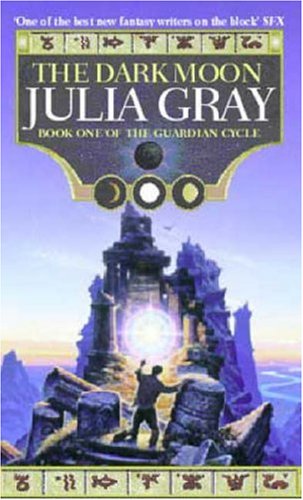
Book review: The Jasper forest by Julia Gray


I was very happy with “The Dark Moon”, the first book of the Guardian cycle from Julia Gray. And so it was with high expectations that I started the second one in this serie: “The Jasper Forest”…. and unfortunately in my opinion it fell flat.

The story left out where Dark Moon ended, with an exiled Terrel drifting on his raft towards the continent of Macul, nearly dead from dehydratation. The first part of the book relates the story of his rescue by the residents of a small village named Fenduca on the continent of Macul, and how they gradually overcame their distrust of him by using his much needed healing skills. Only one thing matter to Terrel however: to hold his promise to his beloved Alyssa to come back for her, and thus, Terrel is desperate to find a way to go back home in Valdanis. However his role in an ancient Prophecy is not over yet, and his ghost friends as well as his dreams of incoming destruction will make Terrrel reluctantly realize he has still a role to play on this continent before being able to come back home. Indeed, similar to what happened in Belancuria in Valdanis in the Dark Moon, there is apparently an elemental force in the royal city of Talazoria that threaten to destroy everything on the continent, and the aftershock would even send a wave of destruction on the ocean towards Valdanis. Terrel will then leave Fenduca and travel across the continent to Talazoria hoping to use his past experience of dealing with elementals to stop the incoming destruction.

Personally I think that the first part of the book was too long. There is not enough stuff going on around a small insignificant village like Fenduca to write 200 pages or so about it. In contrast, the Valley of Darkness was probably the best part of the book, and Terrel’s walk into the mist at night, trying to run away from the Valley, was gripping. Another problem is that the entire book is devoted to Terrel, and his strained relationship with Jax was not exploited very much. I would have liked parallel chapters with Jax’s or the seers’point of view of what is happening in Valdanis, just like it was with Dark Moon.

In conclusion, I liked reading this book, but not as much as I did the first one. My concern right now is that I know there are 3 more books in the serie, and I hope these are not fillers to reach the conclusion of the serie.

Randonnée: Mt Seymour


La ville de Vancouver est située en bordure d’une chaîne de montagnes côtières qui représentent la partie ouest des montagnes Rocheuses. Cette chaîne de montagne ajoute un charme indéniable à la ville, et inspire à ses habitants une qualité de vie remarquable axée sur un bel environnement et les activités plein-air.
Trois de ces montagnes attirent l’attention pour les activités de plein-air, soient le Mont Seymour, le Mont Grouse, et les Monts Strachan et Black Mountain, qui sont mieux connu sous le nom Cypress Mountain, un site hôte des derniers Jeux Olympiques d’hiver de Vancouver (2010). Aujourd’hui cette chronique aura pour objet le Mont Seymour.

Le Mont Seymour domine Vancouver du haut de ses 1500 mètres. Il fait partie d’un parc provincial, le Mount Seymour Provincial Park. Un centre de ski a été aménagé au sommet, d’une faible dénivellation de 330 mètres, soit un peu moins de la moitié du Mont Ste-Anne. Il faut comprendre que l’hiver à Vancouver il fait aux alentours de 5-7 oC et par conséquent, la neige ne se retrouve qu’au sommet des ces montagnes. Le niveau de difficulté de ce centre de ski est bas, plus pour les débutants-intermédiaires. Cependant, l’été, l’ascension du sommet du Mt Seymour est très agréable, et offre une vue imprenable sur la ville de Vancouver elle-même, ainsi que ses environs. Par beau temps on peut observer le fameux Mt Baker, un volcan dont la silhouette blanche à l’horizon est une signature de la région. Une particularité de la randonnée est de marcher dans la neige même au mois de Juin, alors les bottes de randonnées sont de mise! Il existe un stationnement au bas du Centre de ski, à 930 mètres d’élévation, par conséquent la randonnée est d’une dénivellation de 600 mètres environ pour se rendre au premier pic. Je considère cette randonnée comme étant moyenne en difficulté, dépendant s’il y a neige au sol ou pas, et le dernier tiers est plus escarpé. Environ 4-5 heures aller-retour.

Thursday, August 5, 2010

Book review: Under Heaven by Guy Gavriel Kay


I am a big fan of Guy Gavriel Kay, ever since I read his first trilogy “The Fionavar Tapestry”. Although his following books were less and less fantasy and more and more historical-based, his prose is always beautiful and emotion-driven, and there is always that little mystical side in his stories, not always explained but part of the environment and makes it richer. Although most of his books occur in imaginary worlds, Kay is usually setting up their story based on the historical background of several countries, e.g. medieval Italy “Tigana”, medieval France in “A song for Arborne”, medieval Spain in “The Lions of Al-Rassan”, ancient Constantinople emperor Justinian in the Sarantine Mosaic, and the Vikings invasion of England in the “Last light of the sun”. In this new book, Kay continues the pattern and explores the ancient dynasties in China.

For those familiar with The Sarantine Mosaic, you will soon realize Under Heaven follows similar patterns. The story figures Tai, the second son of a famous general father. After the death of his father, Tai decides to spend his two years of mourning to a far-off battlefield where some fourty thousands of Kitanand Taguran soldiers died in battle. The ghosts of these soldiers, both Kitans and Tagurans, are still haunting this ancient battlefield, moaning and crying at night, and so Tai spends his two years burying these soldiers properly so that they can be at rest. This earns him the gratitude of both the Kitan Emperor and the former Taguran enemies. Unexpectedly, the Taguran queen offers him 250 Sardian horses. To understand the value of this gift, here is a quote directly from the book:

So precious are these horses that you gave a man one … to reward him greatly. You gave him four or five of those glories to exalt him above his fellows, propel him toward rank – and earn him the jealousy, possibly mortal, of those who rode the smaller horses of the steppes.” Obviously, this “gift” of 250 horses makes Tai a marked man, and thrusts him back in the reality of life to become an important player in a political game where he has little or no experience. He has no choice but to travel to the Kitan’s capital to meet with the aging emperor and his beautiful and powerful concubine, to decide what to do with this gift, or curse. Kay’s readers will recognize a pattern of the Sarantine mosaics here with Crispin going to Sarantinum, to meet the emperor and his beautiful wife, bringing political changes in his wake into the empire.

Then in parallel we have the story of Tai’s sister, Li-Mei, which has been sent as an imperial bride to the nomads by their politically connected ambitious older brother. She will be rescued by a renegade shaman, a side story that will bring up the magical side of the book. Indeed, as opposed to Tai and the political intrigues in the city, in this part of the book we get to learn more of the country outside of the Great Wall of Kitan, with their superstitions and myths.
And finally, on top of all this, this is the story of events that led to a revolution that brought the 9th dynasty to its knees, because of a feud between the first minister and the most favored general. And who benefits from Tai’s horses may possibly get the edge that will be the deciding factor in this conflict.

When Kay published Ysabel a few years ago, I was a little disappointed by this book; I thought there was something missing, without being able to put my finger on it. No such problem here with Under Heaven. Very reminiscent of the Sarantine Mosaic in its scope and story, and characters. I would say that it was maybe a little too similar, when I first saw the beautiful and powerful concubine I rolled my eyes to the ceiling. On the other hand, I liked the Sarantine Mosaic so much I did not mind too much the similarities in this new book. “Under Heaven” is a beautiful read, not really fast paced, not too slow either, and characters such as Tai and Li-Mei evolve alongside the story, which is always a good thing. I thought the end of the story was a little bit rushed, but I think that is because the point of this book was not the resolution of the conflict, which could have gone one way or another according to Kay’s philosophical comments in the end of the book, but rather how events could change someone’s life and have impacts on a larger scale.

Wednesday, July 28, 2010

Randonnée: Joffre lakes


Parmi les belles randonnées que j’ai eu l’occasion de faire dans les environs de Vancouver, la piste de Joffre lakes figure certainement en tête de liste. 6 heures de marche aller-retour (11 km), une élévation généralement douce (environ 700 mètre de dénivelé sur 5.5 km), et de merveilleux paysages. La piste passe près de 3 lacs aux eaux turquoises, et s’arrête sous le Matier glacier, qui est une vue à couper le souffle lorsqu’en arrière-plan d’un de ces lac. Si vous avez la chance de faire cette randonnée par une belle journée ensoleillée, le contraste ciel bleu, glacier blanc enneigé et lac turquoise est encore plus formidable. C’est également possible d’y camper, dans un sol plutôt rocailleux, évidemment c’est premier arrivé, premier servi. L’altitude à cet endroit étant de 2000 mètre environ, je suggère des vêtements chauds pour y passer la nuit!

Le chemin est bien entretenu, particulièrement au début. Le premier lac turquoise est rapidement atteint, à environ 5 minutes du stationnement. Entre le premier et le 2e lac on retrouve un chemin plus accidenté, notamment une zone de grosses roches que l’on doit franchir en sautillant sur les roches. Puis on arrive au 2e lac, très photogénique avec un glacier au loin qui surplombe la vue. Par la suite, on rejoint facilement le 3e lac, qui n’est pas très éloigné, environ 1 km. On longe le lac dans toute sa longueur jusqu’à son extrémité sud, sous le glacier. La vue de ce lac à partir de cet endroit vaut vraiment le détour (voir photo). Une toilette sèche est également disponible à cet endroit en cas d'urgence :)

Pour s’y rendre: Le stationnement est situé à environ 1 heure de Whistler (environ 2 :30 heures de Vancouver), en suivant la route 99. En approche de Pemberton à partir de Whistler, tournez à droite à l’intersection vers Mount Currie. En ville, tournez à droite vers Duffey Lake et Lillooet, toujours sur la 99. La route grimpe brusquement, continuez une courte distance vers le stationnement du BC Parks Joffre Lake à droite de la route.

Tuesday, July 27, 2010

The Guardian Cycle #1: The Dark Moon by Julia Gray


This book was a pleasant surprise.

I got it from a second-hand bookstore prior to leave for a long flight, and my rule that day was to pick up a book from an author or a series I have never heard about. It turned out to be a great choice :) The world is original; the civilization is built upon islands that are floating around the ocean according to tides that are caused by the interaction of four moons. These four moons do not only control the movement of the islands, since their interaction will also affects how crops will grow, as well as other events such as earthquake predictions, and thus, the day-today life on these islands is based on the astronomical study of these moons.

The story is not extraordinary, twins are born on a night were a great hero (the Guardian) was predicted to be born. The first-born is a perfectly formed baby while is brother is a cripple with strange eyes, and thus he is discarded into a mental institution in favor of the beautiful baby that is obviously going to grow up as the prophesized hero.... or is he? Both children have hidden talents, but when the Moons start to behave strangely and the Islands begin to spin out of control, in danger of colliding with the main continents, the prophecy begins to unfold.

Some story developments became obvious after a few chapters; however, what I liked the most was the mysteries surrounding this world. From time to time we get glimpses of past events, 400 years ago, that shaped the current civilization and prophecies, and you just want to know more about it. The mysterious fixed landmass called continent, home of barbarian civilization (or so we think) are also intriguing. Honestly while reading I felt like when I was watching the TV show "Lost" and that some new elements were added up from time to time and not very much explained, and it kept me going on wanting some more.

Moving forward to the second book, I believe there are lots of things yet to discover about this series!

Monday, July 26, 2010

Book review: The Infinity Gate by Sara Douglass


Before talking about the Infinity Gate, the conclusion to the Darkglass Mountain trilogy by Sara Douglass, just a quick word about her previous works that led to this trilogy.

First of all I liked very much the first trilogy, “Battleaxe”, “Enchanter” and “Starman”. The story, embedded in the magic of prophecy, surprised me a few times and kept me going for the entire trilogy without being bored. Sure, the characters are very black and white, it’s a good fairy tale ending-type of story, but still I liked the originality of the magic system, and the good feeling I had with the way the land Tencendor was created, and the variety of its magical beings.

On the other hand, I hated the second trilogy “Sinner”, “Pilgrim”, and “Crusader”, plain and simple to me it sucked. Just to make a quick summary, everything that was built in the first trilogy, and that you came to care about, is completely and utterly destroyed, and everyone is killed. I mean, it’s not bad enough that Tencendor and its people are destroyed, the land mass is even wiped out of the map! It was so depressing it was not even funny. I usually don’t mind characters or world being killed or destroyed in books, like, I remember being shocked by the Land’s destruction in Covenant’s second trilogy but it was written in such a way it was made as part of the plot. However in this case there is something about the writing that makes it just pointless destruction. And it feels like reading the first trilogy was a waste of time, even though it’s a better story. And at least in Covenant’s book there was a chance of rebuilding, not so in this case when the island is under the sea!

Anyway, Douglass then put in place the elements of her third trilogy by first writing two stand alone stories (“Beyond the hanging wall”, and “Threshold”) where she introduces characters and back-story that are used in this new trilogy. Overall, these two books are nothing exceptional, but still good reads.

Now, to be fair I liked the first two books of this new trilogy, “Serpent bride” and “Twisted citadel”. Not as good as the first trilogy, but certainly better than the second one. Among the bad things are characters that suddenly come out of nowhere from the previous trilogies, even though they should all be dead, like Icariis that were conveniently elsewhere when Douglass destroyed everything, and also, amazingly, the icarii enchanter Stardrifter, that was last seen killed and dismembered at the end of the previous trilogy. I was not convinced by the explanations on his survival….And last, but not the least, the famous Battleaxe himself, Axis Sunsoar, that she brings from the dead… What the heck really… did she regret what she did with Tencendor and tried to bring these people back? It sure looked that way to me.
This last book of the trilogy, “Infinity gate” was a good read, but also a little of a letdown. There was a chance for epic battles considering the massive armies walking around, but nothing large scale happens rather some individual actions are taking places. A few copouts too, out of nowhere a 1-year old baby is the most powerful enchanter ever born and provides the solution to the final problem. Some good things too, I thought the redemption of the Skraelings was neat, the ending was also left open ended, which may be annoying for some, but I always like that since it leaves room for the imagination. With the glimpse we got of the young Stardancer’s power combined with the One and Ravenna’s baby stuck in the Nightmare world, you can expect that Douglass had in mind a confrontation between these characters in a future book. Considering her unfortunate terminal illness whether or not we ever see this book is pure speculation right now. I certainly wish her the best.

Friday, July 23, 2010

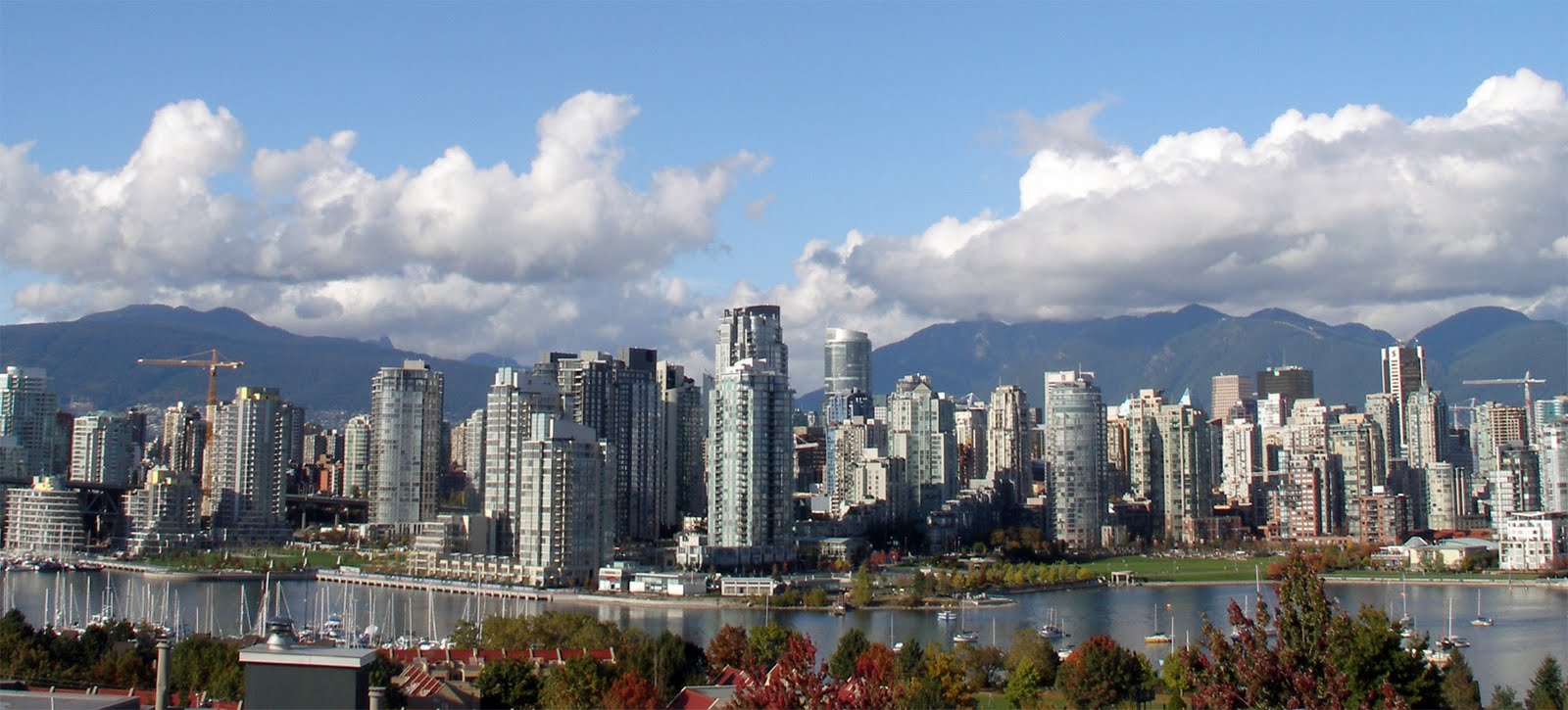
Vivre à Vancouver


La question que l'on me pose le plus souvent sur ma vie à Vancouver est la suivante: Est-ce si dispendieux de vivre à Vancouver?

La réponse courte est oui.

La raison principale du coût de la vie élevé est l'immobilier, qui est complètement démesuré ici. Par exemple, dans mes recherches pour acheter un condominium dans Fairview, ou Kitsilano, qui sont deux quartiers à 30 minutes de marche du centre-ville, je ne trouve rien en dessous de 500 000$ pour un logement de 800 pieds carrés et deux chambres. A Québec, je serais propriétaire d'une superbe maison pour ce prix là! Alors imaginez le prix d'une maison.... les bungalows valent des millions.

Par contre, si on regarde l'épicerie, je ne vois pas tellement de différence avec le Québec, à moins de chercher des items spécialisés, genre fromage du Québec. Les restaurants sont également dans les même prix, même que si on est amateur de sushis, on les aura moins cher ici. Comme il n'y a pas d'hiver (la plus basse température est aux alentours de 3-5 degrés celsius en Janvier), on a pas besoin de pneus d'hiver, pas besoin de payer pour du chauffage, ou de contrat de déneigement. De plus, pas besoin de payer 1500$ pour aller skier dans l'Ouest à Whistler, on y est déjà :) Pas besoin de linge super chaud non plus, j'ai d'ailleurs troqué mon Kanuk pour un ensemble de ski plus léger car j'avais beaucoup trop chaud avec mon Kanuk, même à Whistler!

Donc le gros coup à donner est l'immobilier, ensuite c'est très comparable avec la vie dans l'est.